ABOUT THE AUTHOR
Jeffrey Carr writes from the place where science, execution, and responsibility meet.
MSAT. Manufacturing. Technology transfer. GMP readiness. Leadership. And the human consequences behind every technical decision.
The engineer behind the book.
Jeffrey Carr has built his career around the work that happens between development and dependable manufacturing.
His experience spans Manufacturing Science and Technology, technical operations, manufacturing leadership, technology transfer, process scale-up, operational readiness, engineering runs, process validation, and GMP execution across advanced biomanufacturing environments.
He has worked across cell-therapy and biologics platforms, with experience involving T cells, NK cells, mesenchymal stromal cells, hematopoietic stem cells, corneal endothelial cells, and monoclonal antibodies. That breadth reinforced a lesson that sits at the center of The Work Between: different modalities change the details, but the translation problem remains.
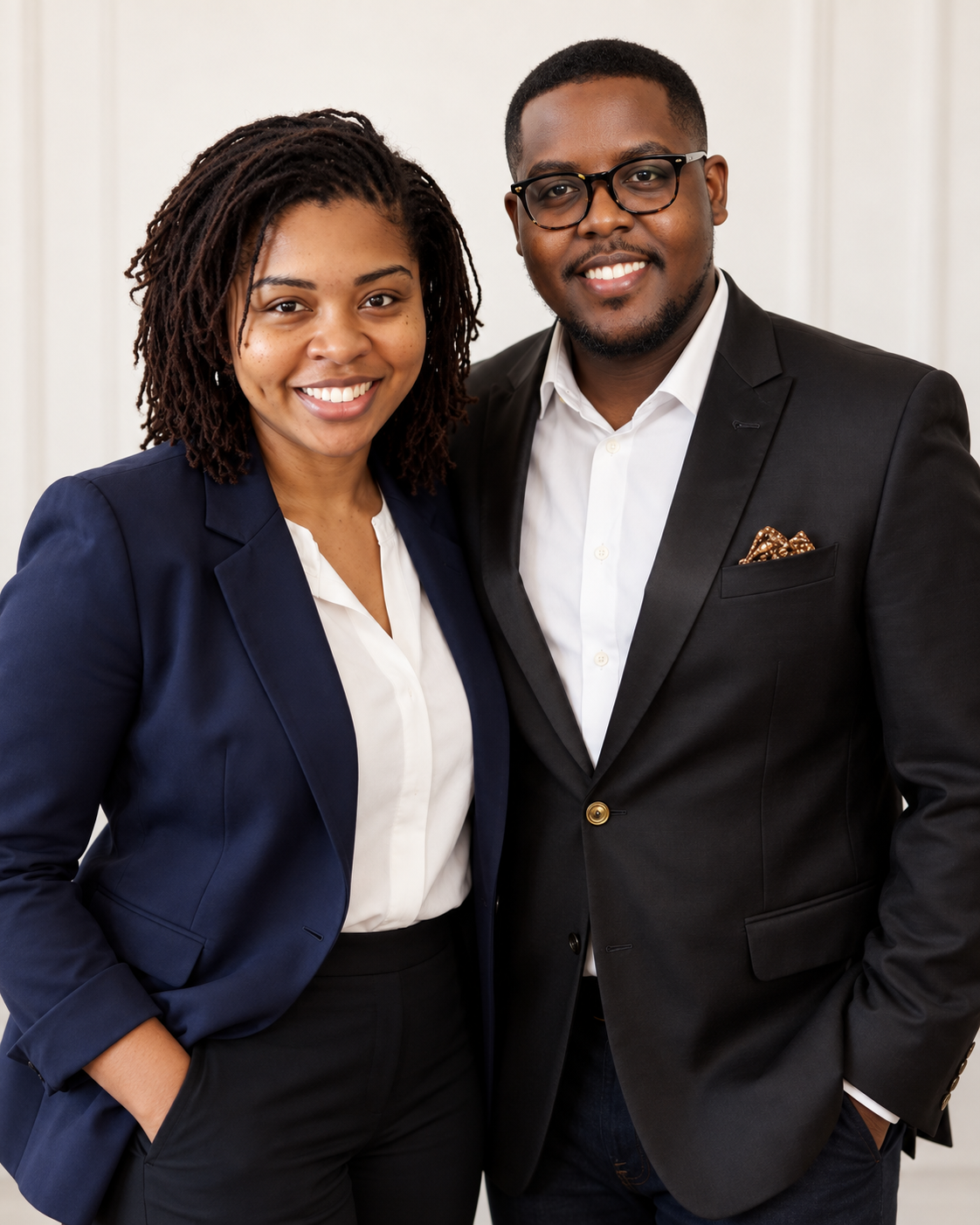
Jeffrey has been married to Jonica for 10 years. They have 3 children- Leo, Bella, and KB.
Two disciplines shaped the way he sees the work.
Engineering taught him to ask:
Can this actually be executed?
Not once. Not only by the process expert. But repeatedly, by different people, under real manufacturing conditions.
Pastoral leadership taught him to ask:
Who carries the consequence of this decision?
Operators. Teams. Patients. Technical decisions are never merely technical once another person has to live with them.
WHY THIS BOOK
Because too much of MSAT is learned only after something goes wrong.
The field carries enormous amounts of tacit knowledge—lessons learned in engineering runs, deviations, difficult transfers, scale-up surprises, late-night troubleshooting, and decisions that never make it into the final slide deck.
The Work Between was written to give that invisible work language. Not as a template library. Not as a textbook pretending every program is the same. But as a practical narrative about judgment, readiness, complexity, stewardship, and what it really takes to move from possibility to dependable execution.
“The process did not fail because people stopped caring. It failed because reality exposed an assumption nobody knew was carrying the process.”
 The Work Between